Fix & FlipHow To Fund Your First Fix & Flip In 2026
Everything a first-time flipper needs to know about hard money — from ARV and points to draw schedules and closing in 24 hours.
Read articleHow real estate investors fund the purchase and renovation of a property in one loan — and close fast enough to win the deal.
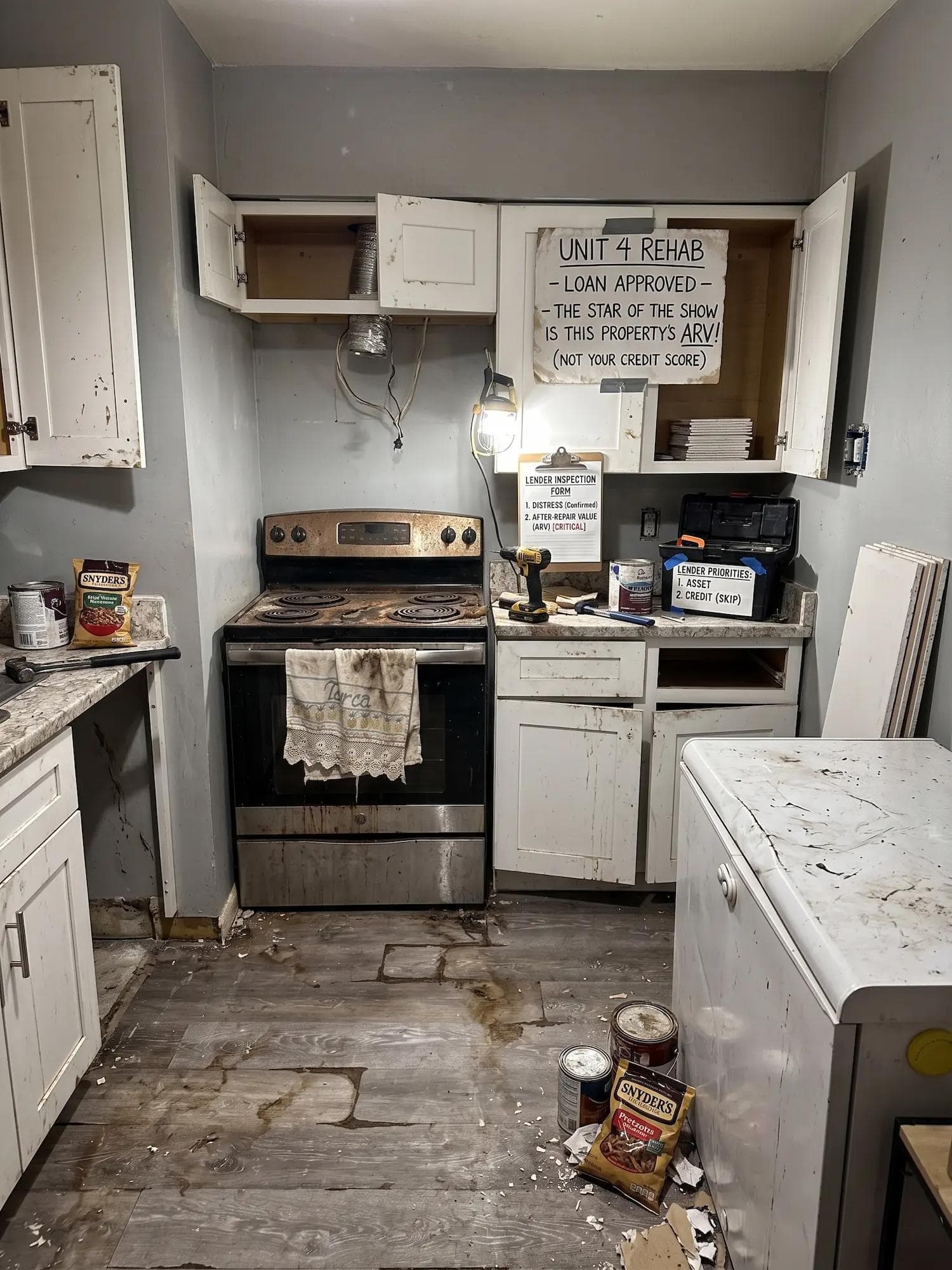
Fix and flip financing is short-term, asset-based capital built for one job: buy a distressed property, renovate it, and sell it for a profit. Unlike a bank, a hard money lender underwrites the deal — the purchase price, the rehab scope, and the after-repair value — not your tax returns.
This guide walks through how flip loans are structured, what the numbers need to look like, and how to line up capital that closes in days instead of weeks. When you are ready for terms on a specific property, jump straight to the loan program below.
A flip loan bundles two things a bank keeps separate: the acquisition and the renovation. You get funds to buy the property (typically up to 90% of the purchase price) plus 100% of the rehab budget, released through a draw schedule as the work is completed.
The best flips work on paper before you swing a single hammer. If the deal only pencils with an optimistic ARV, it does not pencil.
— Henry
Go deeper on every part of this topic with the guides and breakdowns below.
Fix & FlipEverything a first-time flipper needs to know about hard money — from ARV and points to draw schedules and closing in 24 hours.
Read articleExpect to bring the down payment on the purchase (often around 10%) plus closing costs and a reserve for carrying costs. The rehab itself is typically financed 100% and reimbursed through draws.
Because the loan is underwritten on the deal rather than your income, funding can happen in as little as 24 hours once the address, scope, and comps are in.
Tell me about your project and get a same-day answer. No application fee, no obligation, no nonsense.