How to Finance a Fix and Flip

Henry Tabeling
Founder & Lead Underwriter ·
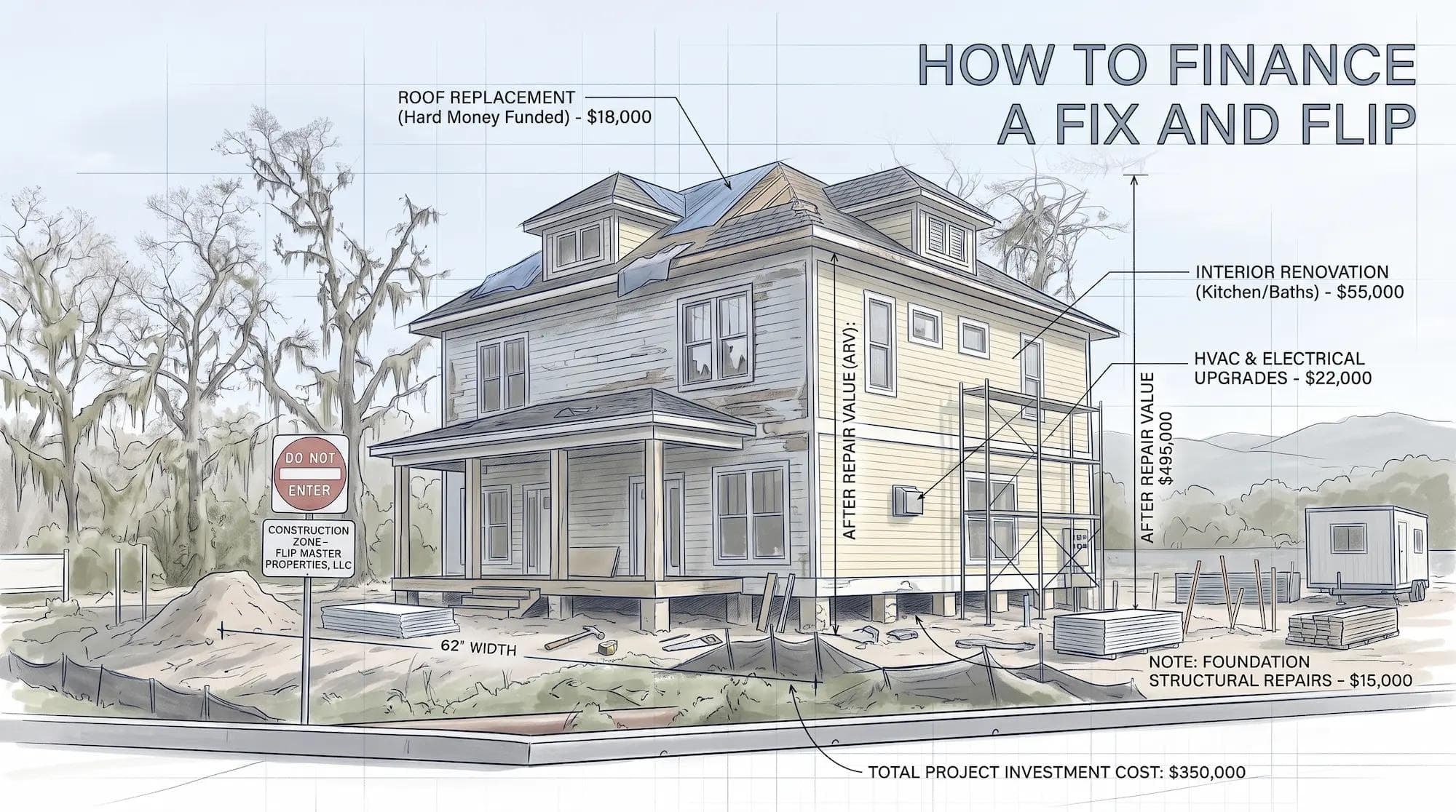
Real estate investors require structured and reliable capital to acquire distressed assets and execute successful renovations. Securing the right financing for a fix and flip project often represents the primary barrier for both novice and single-transaction investors. This guide outlines the practical steps to select a property, analyze critical underwriting numbers, estimate renovation costs, and secure private funding.
Key Takeaways
- Property selection must prioritize structurally sound foundations in submarkets with active comps, avoiding major historical or municipal hurdles.
- The seventy percent rule serves as the baseline for purchasing, stating that the acquisition price should not exceed seventy percent of the after repair value minus renovation costs.
- Rehabilitation budgets must be thoroughly documented with detailed contractor bids, as direct private lenders finance these budgets through a structured draw schedule.
- Typical target profit margins for beginner flippers should range from fifteen to twenty percent of the projected after repair value.
- •Private hard money loans offer the speed and flexibility required to secure distressed deals, focusing primarily on property collateral value rather than personal debt-to-income ratios.
Selecting the Ideal Fix-and-Flip Property: Focus on the Foundations
A successful fix and flip project starts with choosing the right asset. For investors with limited experience, property selection must focus on cosmetic and moderate renovations rather than complete structural rebuilds. Beginner flippers often make the mistake of purchasing heavily compromised assets because of low initial purchase prices. This approach frequently leads to unexpected structural expenses, foundation remediation, or extensive municipal permitting delays.
When evaluating potential properties, you should select assets in established residential submarkets with high transaction volume. Analyze comparable sales within a half-mile radius that have closed in the last ninety days. Look for single-family homes that require visible, superficial improvements such as paint, flooring, updated kitchens, and modern bathrooms. These renovations deliver the highest return on investment while keeping timelines predictable. Ensure that municipal zoning requirements do not restrict your planned improvements, and avoid properties located near high-traffic commercial zones or environmental hazards.
Understanding the Core Metrics: Key Numbers Every Investor Must Track
Profitable real estate investing relies entirely on objective financial metrics. You must understand and calculate four essential values before making an offer on any property. The first is the As-Is Value, which represents the current market price of the asset in its distressed state. The second is the Purchase Price, which is the actual contractual amount you pay to acquire the property. The third is the rehabilitation cost, which represents the total capital needed to complete all planned renovations.
The fourth and most critical metric is the After Repair Value. The After Repair Value is the estimated market value of the property once all rehabilitation work is finished to professional standards. To protect your capital, you must apply the seventy percent rule. This formula states that the maximum purchase price of an asset should equal seventy percent of the After Repair Value, minus the estimated renovation budget. Adhering to this baseline provides a financial safety margin to absorb holding costs, transactional fees, and unforeseen construction expenses.
Henry Tip: Do not estimate your After Repair Value based on optimistic future market appreciation. Always base your calculations on active, closed comparable sales from the immediate neighborhood. Direct private lenders underwrite deals based on historical comp data rather than speculative future projections, and matching their realistic view protects you from overpaying.
Managing the Rehabilitation Budget and the Draw Phase
Renovation costs represent the largest variable expense in any fix and flip project. To secure financing, you must present a highly detailed, itemized Scope of Work. This document must break down construction costs by trade, including materials and labor for plumbing, electrical, framing, roofing, and finishes. Direct private lenders do not release the renovation budget in a single lump sum at closing. Instead, the lender holds the rehabilitation capital in escrow and distributes it through a structured draw schedule.
The draw phase requires the investor to complete specific phases of the renovation out of pocket before requesting reimbursement. When a milestone is completed, such as rough plumbing or drywall installation, you request a draw. The lender then dispatches an inspector to verify that the work meets professional standards. Once verified, the lender releases the matching funds from escrow. As an investor in the draw phase, you must maintain sufficient cash reserves to pay your contractors for initial work before the first draw is disbursed.
Targeting Realistic Earnings: What Profit Margins to Expect
Beginning flippers must establish clear, realistic financial targets rather than relying on exaggerated profit claims. A standard, conservative target for a single-family renovation is a net profit margin of fifteen to twenty percent of the After Repair Value. Alternatively, many investors require a minimum absolute profit of forty thousand dollars per transaction to justify the time, holding risk, and management effort.
To calculate your projected net earnings, you must subtract all costs from the After Repair Value. These costs include the purchase price, rehabilitation budget, buying closing costs, selling transactional fees, realtor commissions, and ongoing holding costs. Holding costs include property taxes, insurance, utilities, and monthly loan interest payments. By accounting for every line-item expense, you ensure that your target profit margin remains achievable even if construction timelines extend by several weeks.
Case Study: Refi and Rehab Analysis on 21st Street, Winston Salem
To illustrate how these numbers function in a real-world transaction, let us analyze a single-family residential property located on 21st Street in Winston Salem, North Carolina (zip code 27105). This transaction is structured as a refinance and rehabilitation loan for an investor who already owns the property in its distressed state. The property has an initial As-Is Value of twenty thousand dollars, reflecting its significant need for rehabilitation. The final contract purchase price was seventeen thousand five hundred dollars, representing an excellent entry point.
The investor secured a rehabilitation loan of one hundred forty thousand dollars, which represents the entire renovation budget. The total loan amount is one hundred forty thousand dollars. Upon completion of the extensive scope of work, the property has a projected After Repair Value of two hundred forty thousand dollars. This case study demonstrates how private debt can fund one hundred percent of a massive renovation project, creating significant equity from a highly distressed asset.
| Financial Metric | Value for Project | Underwriting Context |
|---|---|---|
| Property Location | Winston Salem, NC 27105 | Single Family Residential asset in a growing submarket. |
| Distressed Purchase Price | $17,500 | Acquired at a deep discount, slightly below the $20,000 As-Is Value. |
| Rehabilitation Loan (Draws) | $140,000 | One hundred percent of the construction budget financed by the lender. |
| Total Loan Capital | $140,000 | Structured private debt covering the complete renovation SOW. |
| After Repair Value (ARV) | $240,000 | Estimated retail market price upon completion of all repairs. |
| Total Development Cost | $157,500 | Sum of the initial acquisition price and the renovation budget. |
| Projected Gross Equity | $82,500 | The spread between the projected ARV and the total development cost. |
| Estimated Net Profit Margin | $62,500 | Subtracting estimated holding interest, closing fees, and commissions. |
The 21st Street project illustrates a highly profitable deal structure. By securing a total loan that covers one hundred percent of the one hundred forty thousand dollar rehab budget, the investor preserves personal cash reserves. The massive spread of eighty-two thousand five hundred dollars between the total development cost and the finished After Repair Value provides a substantial cushion. This structure ensures that the investor remains profitable even if market conditions change or unforeseen construction expenses arise during the draw phase.
Step-by-Step Guide to Financing Your Fix and Flip Project
- Identify a distressed single-family property priced significantly below its potential neighborhood value, prioritizing assets that require cosmetic rather than structural work.
- Formulate an itemized Scope of Work with detailed contractor bids, ensuring that all material costs and labor fees are explicitly defined for each trade.
- Submit your deal details, including the property address, purchase price, rehab budget, and your exit plan, to a direct private lender for an asset-based review.
- Obtain a loan commitment within twenty-four hours, verifying the LTV limits, interest-only payments, and the specific draw milestones required for renovation funding.
- Execute the renovation in phases, funding the initial contractor work out of pocket, and requesting draws to reimburse your cash reserves as milestones are verified by inspectors.
Final Thoughts
Successful real estate investing requires a careful balance of property selection, precise financial math, and reliable capital. By targeting assets with strong margins and partner lending programs that finance both acquisition and construction, flippers can scale their portfolios. If you are ready to secure capital for your next single-family project, you should discuss your strategy with an asset-based lender to obtain final pricing terms.
Got A Deal That Needs Funding?
Send us the address and your numbers. Get terms same-day and close in as little as 24 hours.