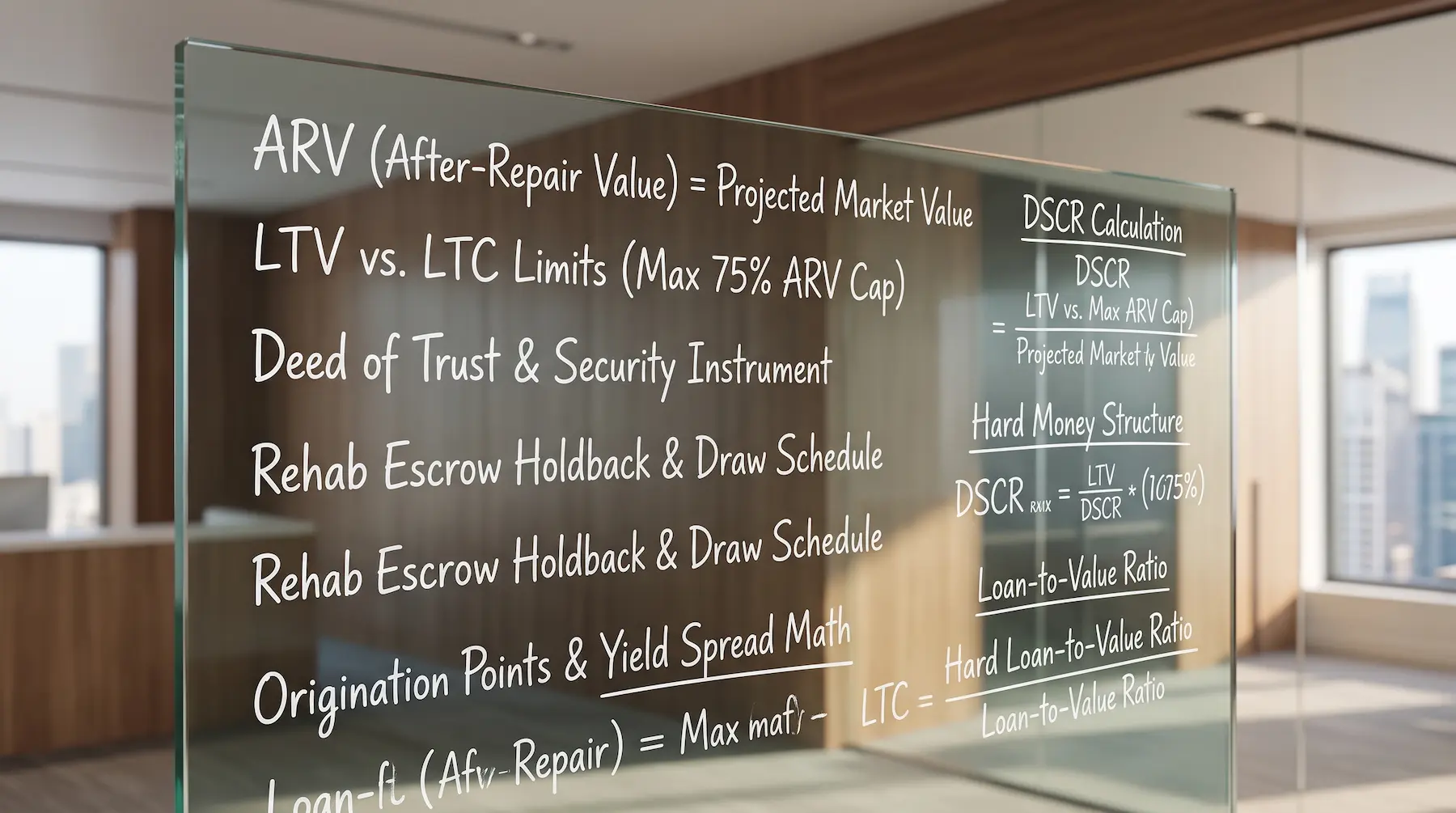
Who Uses Hard Money Loans: Real Estate Investor Profiles

Henry Tabeling
Founder & Lead Underwriter ·

Understanding the market demographics of private capital is essential for navigating the real estate industry. While traditional financial institutions prioritize personal borrower criteria, private lenders evaluate the value and potential of the underlying collateral. This structural focus makes hard money loans the preferred vehicle for specific classes of real estate professionals and property buyers. By examining who uses these private debt instruments, you can determine if an asset based loan aligns with your investment strategy.
Key Takeaways
- Fix and flip investors represent the largest demographic of private capital users, relying on rapid draws to fund purchase and construction costs.
- Buy and hold investors utilize hard money as short term bridge debt to execute the acquisition and rehabilitation phases of the BRRRR strategy.
- Real estate professionals operating under tight contract timelines rely on private lenders to secure properties in as little as five business days.
- Self employed individuals and borrowers with complex financial profiles access property equity to bypass rigid institutional documentation requirements.
- Private debt acts as a transitional bridge, with clear exit strategies focusing on either property sale or refinancing into long term conventional mortgages.
The Fix and Flip Professional: Financing Distressed Properties
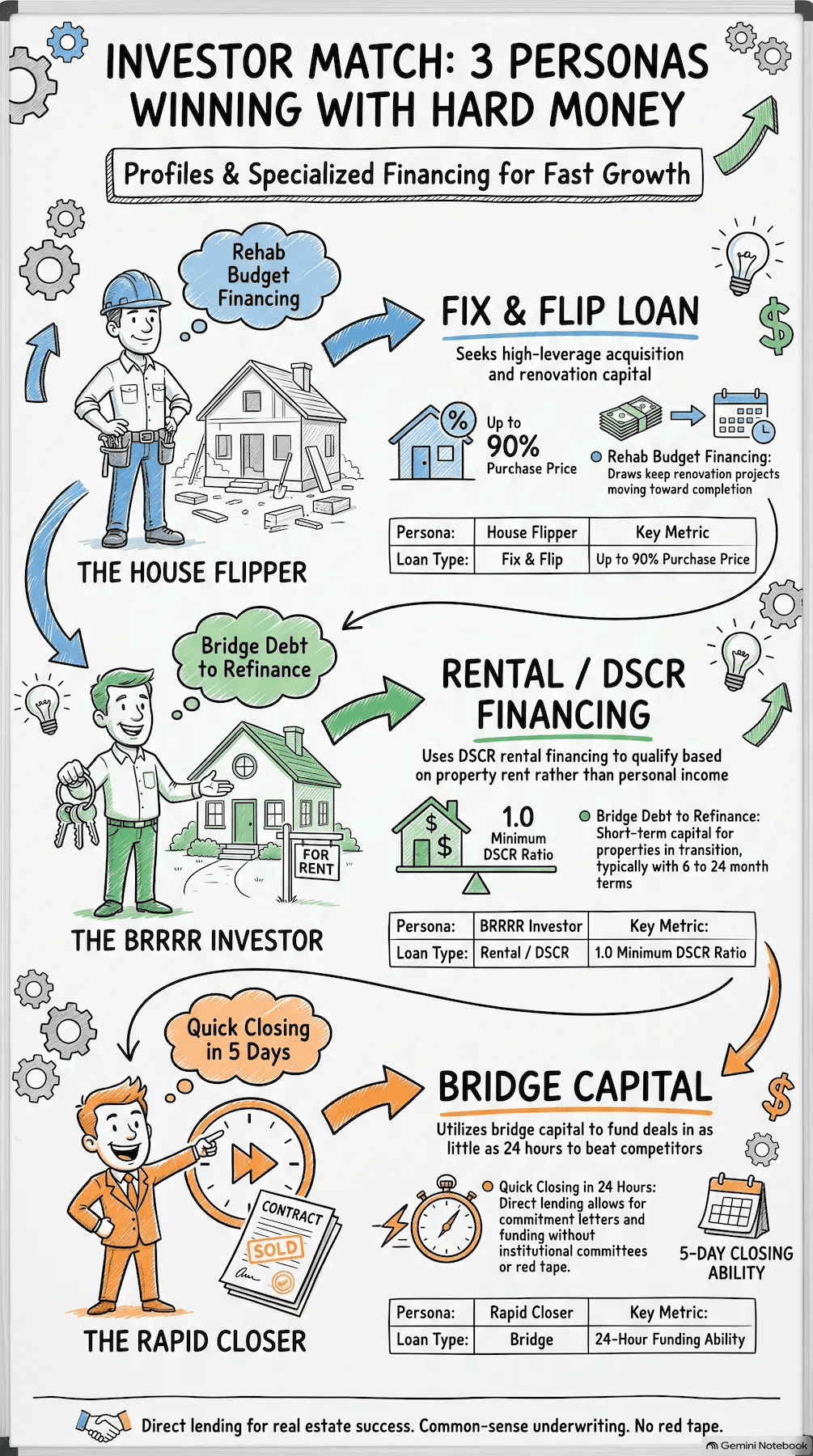
Fix and flip real estate investors focus on buying properties that require significant structural or cosmetic renovations, rehabilitating those assets, and selling them to retail buyers for a profit. Because traditional bank guidelines dictate that a property must be in fully functional, move in ready condition to qualify for financing, flippers cannot use conventional bank loans. Traditional appraisers will flag missing flooring, plumbing issues, roof damage, or electrical hazards, resulting in an immediate rejection.
Direct private lenders solve this problem by offering asset based financing. Instead of rejecting a distressed home, hard money lenders base their loan parameters on the purchase price and the estimated construction budget. These loans are structured with renovation draw schedules, allowing the investor to purchase the asset and receive periodic reimbursements as phases of construction are completed. This capital structure keeps the transaction moving quickly and ensures that the physical asset is successfully brought up to market standards.
HENRY TIP: Do not let W-2 documentation requirements or net tax write-offs restrict your investment pipeline. Private capital focuses on transaction margins, not pay stubs.
The BRRRR Investor: Navigating the Acquisition and Renovation Bridge
The Buy, Rehab, Rent, Refinance, Repeat strategy represents a popular approach to building a long term rental portfolio. To succeed, an investor must purchase an undervalued property, repair the structural or cosmetic defects, place a tenant, and then refinance the short term debt into a long term mortgage. Because the first phases of this method involve purchasing and repairing distressed properties, conventional mortgages are unavailable during the initial phase.
BRRRR investors utilize short term hard money loans as their primary acquisition capital. The private loan covers the initial purchase and construction phases, lasting typically six to twenty-four months. Once the property is rehabilitated and occupied by a qualified tenant, the investor can approach a conventional lender or a debt service coverage ratio lender to pay off the hard money balance. This transition allows the investor to secure a long term, low interest mortgage while retaining minimal personal capital in the property.
The Time Sensitive Buyer: Securing Competitive Real Estate Deals
Real estate transactions are highly competitive, and sellers often prioritize buyers who can guarantee a swift closing. Traditional commercial and residential bank loans require thirty to sixty days to close because of rigorous compliance guidelines, income verification protocols, and formal appraisal panels. If an investor attempts to buy a property from a highly motivated seller using conventional bank debt, they will often lose the contract to cash buyers or investors with fast capital.
Hard money loans close in five to fifteen business days. Because private lenders are not bound by institutional committees or federal compliance underwriting, they can assess a property, review borrower experience, and fund the transaction in a fraction of the time. This speed enables real estate investors to write clean offers without financing contingencies, effectively competing on equal terms with all cash institutional buyers.
The Non-Traditional or Self Employed Borrower: Capitalizing on Equity
Conventional banking institutions evaluate self employed individuals with extreme scrutiny. Entrepreneurs, business owners, and full time real estate professionals often write off business expenses to minimize tax liabilities. While this is an appropriate tax strategy, it reduces the net personal income shown on tax returns. Traditional mortgage underwriters calculate the debt-to-income ratio based on this net figure, which often makes these highly successful business owners look unqualified on paper.
Direct private lenders bypass this institutional barrier. Because hard money underwriting centers on property value and equity, the borrower's personal tax returns do not dictate the loan approval. Self employed investors can secure funding by demonstrating sufficient equity, real estate transaction experience, and a clear exit strategy. This allows business owners to secure profitable opportunities without waiting for multiple tax seasons to adjust their reported earnings.
Comparison Matrix: Real Estate Borrower Personas
| Borrower Profile | Core Objective | Primary Pain Point | Target Asset Type | Typical Exit Strategy |
|---|---|---|---|---|
| Fix and Flip Investor | Acquire and repair distressed homes | Banks reject damaged houses | Severely distressed residential | Sell completed asset to home buyers |
| BRRRR Investor | Acquire, repair, and hold rentals | Banks do not finance construction | Undervalued single or multi-family | Refinance into long term mortgage |
| Time Sensitive Buyer | Secure competitive contracts | Traditional loan processing is slow | Off-market, estate, or auction deals | Sell or refinance after transition |
| Self Employed Entrepreneur | Access funding without W-2 paperwork | DTI calculation rules reject owners | Residential or commercial assets | Refinance or sell after value add |
Got A Deal That Needs Funding?
Send us the address and your numbers. Get terms same-day and close in as little as 24 hours.